
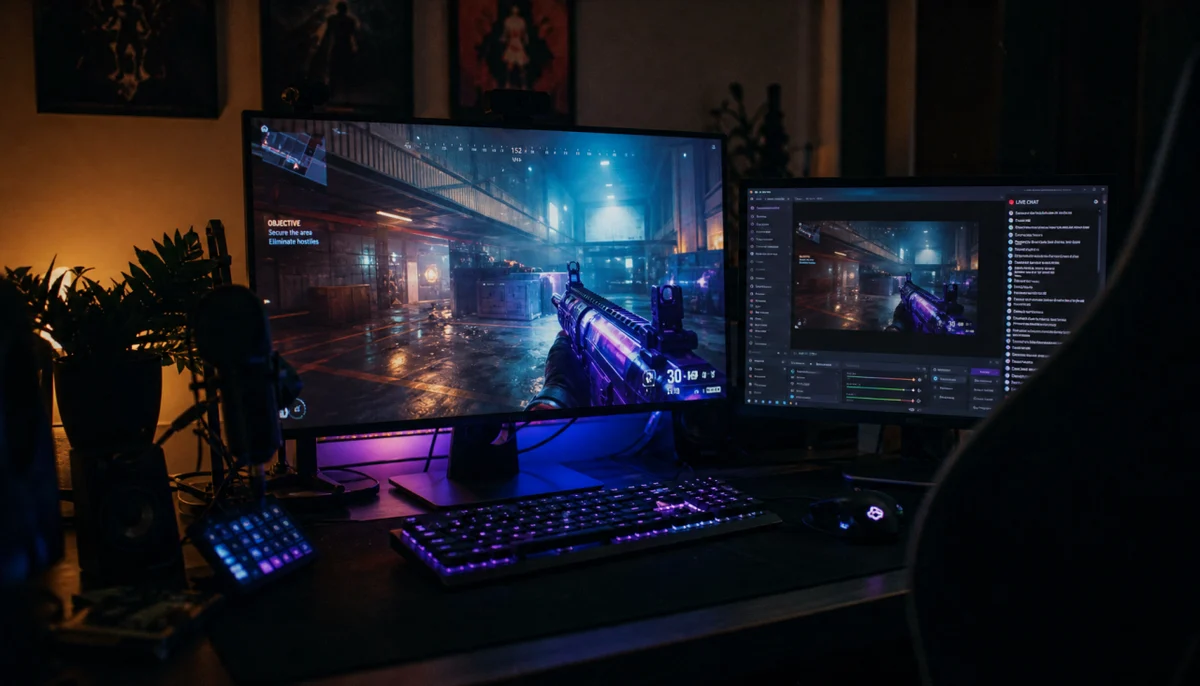

Choosing the right gaming monitor can dramatically change how a game feels. A powerful graphics card may deliver high frame rates, but the display must be capable of showing those frames smoothly and quickly. From competitive shooters to cinematic RPGs, the right combination of refresh rate, resolution, response time, and adaptive synchronization can make gameplay more responsive and visually consistent. The eurogamersonline approach to gaming hardware focuses on matching display specifications with the way you actually play rather than simply choosing the monitor with the biggest numbers. In 2026, gamers have access to high-refresh-rate IPS, OLED, QD-OLED, VA, and mini-LED displays, giving every type of player more choices. Understanding these technologies before buying can help you avoid paying for features that your hardware or gaming habits cannot fully use.
Why Gaming Monitor Performance Matters
A monitor is the final stage between your gaming system and your eyes. If it has slow pixel transitions, excessive input delay, or an unsuitable refresh rate, the benefits of a fast GPU can be limited. A high-refresh display can make camera movement and fast action appear more fluid, while a responsive panel can reduce distracting trails behind moving objects. Variable refresh rate technology can also help synchronize display updates with fluctuating frame rates.
For competitive games, these differences can be particularly noticeable. A player tracking an opponent in a fast first-person shooter benefits from clear motion and quick updates. Meanwhile, someone playing an open-world adventure may value resolution, contrast, HDR performance, and color quality more than extreme refresh rates. The eurogamersonline perspective is therefore simple: prioritize the specifications that directly support your favorite genres and your computer’s capabilities.
Refresh Rate: The Key to Smoother Gameplay
Refresh rate is measured in hertz and describes how many times a monitor can refresh its image each second. Moving from 60Hz to 120Hz or 144Hz can provide a major improvement in perceived smoothness. Higher refresh rates can be especially valuable when games produce frame rates high enough to take advantage of them.
A 144Hz monitor is an excellent starting point for many PC gamers, while 165Hz and 180Hz models offer additional fluidity without necessarily requiring an extreme budget. Competitive players with powerful systems may consider 240Hz, 360Hz, or even higher refresh rates. However, buying an ultra-high-refresh monitor makes less sense if the gaming system consistently produces far fewer frames.
Choosing the Right Refresh Rate
- 100–120Hz: Good for casual gaming and general use.
- 144–180Hz: A strong balance for most PC gamers.
- 240Hz: Excellent for competitive shooters and fast esports titles.
- 360Hz and above: Best suited to highly competitive players with powerful hardware.
The eurogamersonline guide recommends considering actual frame rates rather than choosing refresh rate purely from the specification sheet. A monitor running at 240Hz is most useful when your system can consistently deliver high frame rates.
Resolution and Screen Size Go Hand in Hand
Resolution determines the number of pixels displayed on the screen. The most common choices for gaming include Full HD, 1440p, and 4K. Each offers a different balance between sharpness and graphics performance.

Full HD remains practical for competitive gaming because it places a relatively lighter load on the graphics card. A 1440p monitor can provide a sharper image while remaining easier to drive than 4K, making it one of the most versatile choices for modern gaming PCs. A 4K monitor delivers excellent detail and is particularly attractive for visually rich single-player games, strategy titles, racing games, and high-end setups.
Screen size should also be considered alongside resolution. A large screen with a low resolution may appear less sharp at close viewing distances. For many desktop setups, 24-inch Full HD, 27-inch 1440p, and 27- or 32-inch 4K displays can provide sensible combinations.
Response Time and Motion Clarity
Response time describes how quickly pixels transition between colors. Faster transitions can improve motion clarity and reduce visible ghosting during rapid movement. This is especially important in games where targets, vehicles, or camera views move quickly across the screen.
However, the advertised response-time number should not be the only factor in a purchase decision. Real-world performance depends on pixel transitions, overdrive tuning, refresh rate, and panel technology. An aggressively configured overdrive mode can sometimes create inverse ghosting, producing unwanted bright trails around moving objects.
For eurogamersonline readers focused on competitive play, a monitor with consistently strong motion handling is more valuable than one that simply advertises an impressive response-time figure.
IPS, VA, OLED, and QD-OLED Explained
IPS Panels
IPS monitors are popular because they can offer strong color reproduction, wide viewing angles, and good gaming performance. Modern fast IPS panels can combine high refresh rates with responsive motion, making them suitable for competitive and general gaming.
VA Panels
VA technology is known for stronger contrast than traditional IPS designs. This can make dark scenes appear deeper and more atmospheric. VA monitors can be attractive for RPGs, movies, and mixed-use setups, although individual models vary considerably in motion performance.
OLED Panels
OLED displays offer individually controlled pixels, producing extremely deep blacks and excellent contrast. Their very fast pixel transitions also make them appealing for high-speed gaming. Potential concerns include long-term image retention and the need for built-in protective features, so buyers should consider their usage habits.
QD-OLED Displays
QD-OLED combines OLED contrast with quantum-dot technology to deliver vibrant colors and strong HDR potential. These displays are increasingly attractive to gamers who want premium image quality without sacrificing responsiveness.
Variable Refresh Rate Keeps Frames Consistent
Variable refresh rate, or VRR, allows the monitor to adjust its refresh timing according to the frame rate produced by the gaming device. This can reduce screen tearing and help make fluctuating frame rates feel smoother.
Common VRR technologies include AMD FreeSync, NVIDIA G-SYNC, and HDMI-based VRR. Compatibility depends on the monitor, graphics hardware, connection, and software settings. Before buying, gamers should check whether the monitor supports the synchronization technology their system uses.
For eurogamersonline users, VRR is particularly useful for games where frame rates frequently move up and down. Instead of forcing the display to refresh at a fixed rate, VRR helps the monitor respond dynamically to the available frames.
HDR and Contrast for Better Visuals
High Dynamic Range can improve the difference between dark and bright parts of an image, making supported games appear more realistic. However, simply seeing an HDR label does not guarantee an impressive HDR experience. Brightness, contrast, local dimming, black levels, and panel technology all influence the final result.
OLED displays naturally offer excellent pixel-level contrast, while mini-LED monitors can use numerous backlight zones to improve brightness control. If immersive visuals are a major priority, HDR performance should be evaluated alongside resolution rather than treated as an isolated feature.
Gaming Monitor Specifications at a Glance
| Feature | Best For | Practical Choice |
|---|---|---|
| 1080p | Competitive gaming | 24–25 inches |
| 1440p | Balanced gaming | Around 27 inches |
| 4K | Detail and immersion | 27–32 inches |
| 144–180Hz | Most PC gamers | Excellent balance |
| 240Hz | Competitive gaming | High-performance systems |
| 360Hz+ | Serious esports | Very high frame rates |
| IPS | Versatile gaming | Fast and balanced |
| VA | Contrast-focused gaming | Dark scenes and mixed use |
| OLED | Premium gaming | Contrast and motion |
| VRR | Variable frame rates | Smoother gameplay |
Match the Monitor to Your Gaming Style
Different games place different demands on a display. Competitive FPS players generally benefit from high refresh rates, low input latency, and strong motion handling. Racing fans may appreciate a larger display, high refresh rate, VRR, and vivid HDR. RPG and adventure players can place greater emphasis on resolution, contrast, color quality, and screen size.
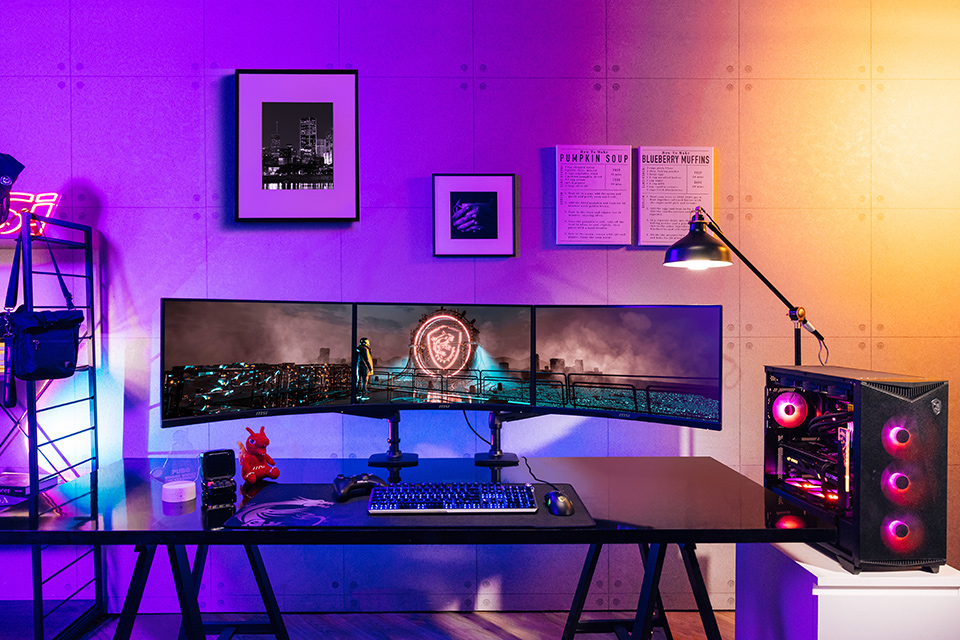
For strategy games, productivity features and resolution may be more important than reaching 360Hz. Console gamers should also verify supported resolutions and refresh rates through the monitor’s available HDMI connections.
The eurogamersonline buying philosophy is to build a monitor choice around actual gaming priorities instead of chasing every premium specification at once.
Connectivity and Ergonomics Should Not Be Ignored
A gaming monitor’s ports determine which resolutions and refresh rates your system can actually use. Before purchasing, check the available HDMI and DisplayPort standards and make sure they support your desired configuration.
Ergonomics also matter during long gaming sessions. Height adjustment, tilt, swivel, and VESA mounting compatibility can make a monitor easier to position comfortably. Features such as a USB hub, built-in speakers, or USB-C connectivity may also be useful depending on the rest of your setup.
A monitor that looks impressive on a specification sheet but cannot be positioned correctly or connected at its intended refresh rate is not a good investment.
How to Choose the Right Monitor for Your Budget
Start by deciding what your current gaming PC can realistically deliver. If your graphics card struggles to reach high frame rates at 1440p, spending heavily on a 360Hz display may not provide much benefit. Similarly, buying a 4K monitor for a low-powered system can force you to reduce graphics settings or resolution.
A balanced upgrade might pair a midrange graphics card with a 1440p 144–180Hz display. A powerful gaming PC can justify 4K high-refresh gaming or premium OLED technology. Competitive players with systems capable of very high frame rates can prioritize 240Hz or higher.
The eurogamersonline recommendation is to divide your budget according to the entire gaming setup rather than spending disproportionately on the display.
Final Thoughts
The best gaming monitor is not automatically the largest, fastest, or most expensive model. It is the one that creates the right balance between responsiveness, visual quality, resolution, refresh rate, and compatibility with your gaming hardware. For many players, a 1440p monitor with a 144–180Hz refresh rate and VRR offers an outstanding combination of smoothness and image quality. Competitive gamers may prefer 240Hz or higher, while graphics-focused players can benefit from 4K OLED or advanced mini-LED displays.
Before buying, consider the games you play, the frame rates your system produces, the distance from your screen, and the features you genuinely need. With the right priorities, eurogamersonline gamers can find a display that makes movement smoother, reactions more responsive, and visual details more enjoyable. A well-matched monitor can turn a capable gaming setup into a noticeably better overall experience.